

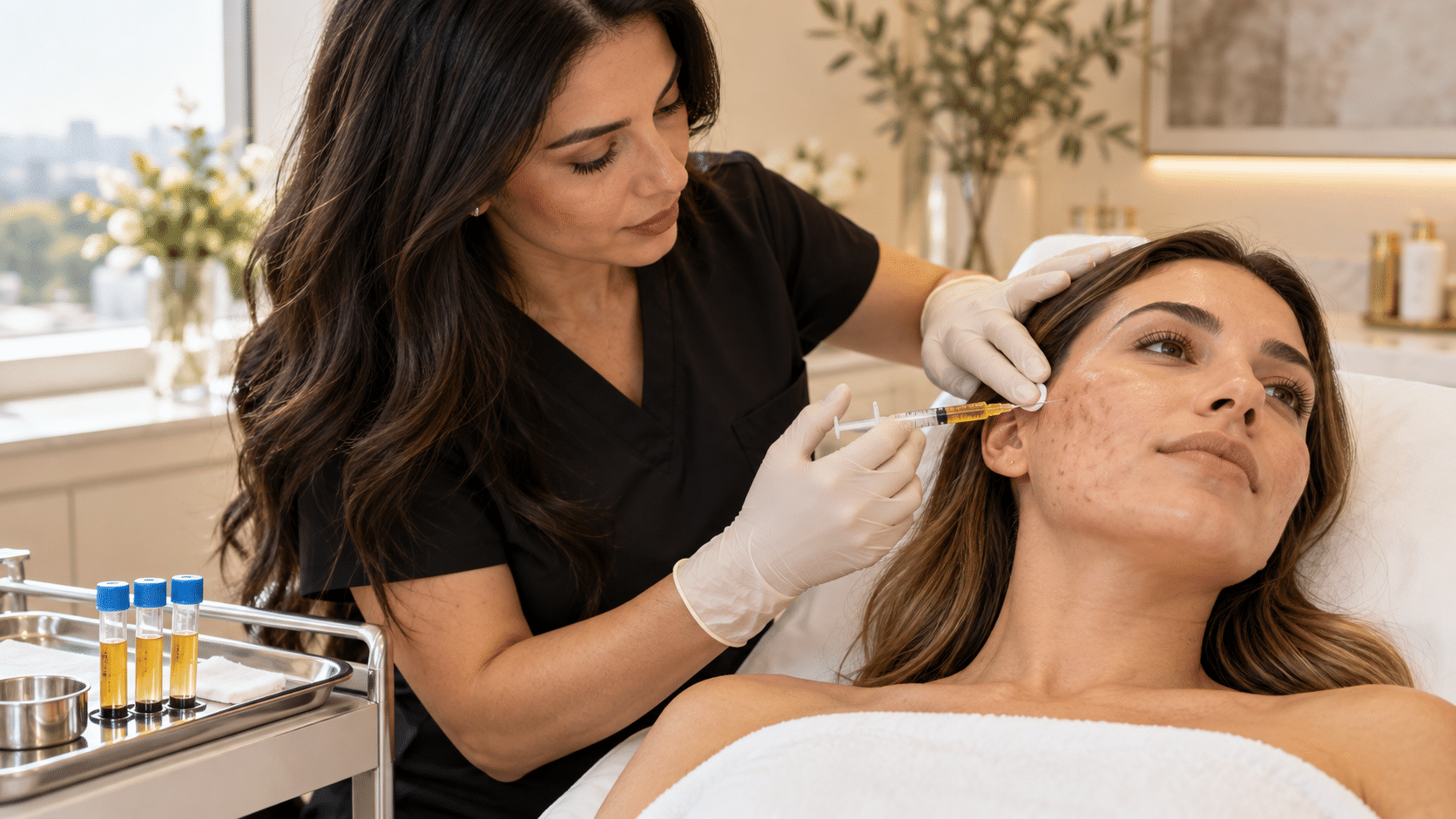
Platelet-rich plasma (PRP) is an advanced treatment for healing acne scars that uses the patient’s blood. You may have heard of this procedure, as it has gained significant popularity among celebrities and beauty experts. During the treatment, doctors extract plasma from the patient’s blood to target acne scars and promote skin rejuvenation.
PRP is performed under professional clinical care as part of a structured treatment approach, with outcomes and satisfaction varying depending on individual patient profiles and scar characteristics. Please book your appointment with Aesthetics Lab today and enjoy our amazing offers.
How to get rid of acne scars with PRP treatment
PRP for acne scar treatment effectively reduces the appearance of scars, but it’s important to have realistic expectations and understand that full results take a few sessions.
PRP is a minimally invasive procedure that uses a needle to draw blood without damaging the dermis or epidermis. This process releases growth factors from the platelet-rich plasma, naturally stimulating collagen production. As a result, it helps to improve acne scars and reduces red or brown spots on the skin.
It is a “dermal remodelling” treatment that encourages your body to self-heal and rejuvenate the skin.
Is PRP Used for Active Acne or Acne Scars?
Active acne and acne scars are different problems; active acne should be managed appropriately before/alongside scar treatment.
What exactly is PRP and its procedure
If you’re curious about what PRP facial treatment here’s a step-by-step breakdown of what to expect.
- Our doctors begin by applying a numbing cream to your face. While the cream takes effect, the doctor will draw a small amount of blood (approximately 10cc, though the amount may vary based on the patient’s needs) from your arm. The blood sample is then processed in a medical centrifuge to separate the platelet-rich plasma.
- Depending on the treatment plan, PRP may be applied or introduced alongside microneedling. If microneedling is included, controlled microchannels are created in the skin as part of the scar-remodeling procedure.
- After the facial, you may notice some redness and light swelling. Dermatologists and medical professionals say these are common side effects that usually disappear within 48 hours.
- Ultimately, the treatment plan will be based on your doctor’s consultation and skin condition. PRP for acne scars may be combined with other treatments such as micro-needling and Hydra facial.
How Many PRP Sessions Are Needed for Acne Scars?
Session count scar type, depth, protocol and combination treatment par depend karta hai. Several sessions may be recommended, usually spaced weeks apart.
What Is the Downtime After PRP for Acne Scars?
Mild redness/swelling may occur; downtime varies and may be longer when PRP is combined with microneedling or another procedure.
Acne scarring causes
Acne is the most common skin condition although it affects any age group but is most commonly seen in teenagers. Acne appears on the face when pores become filled with oil and dust. It causes blackheads, whiteheads and pimples. PRP for acne scars proves an effective treatment for scarring.
Several reasons cause acne but the following are described as considered contributing major rule.
- Sebaceous glands produce oil on the surface of the skin. In acne, these glands produce excessive sebum. The excess oil mixes with bacteria, leading to inflammation and the development of acne.
- Hormonal acne is caused especially in puberty, menstruation, PCOS(polycystic ovary syndrome) etc.
- Stress
- Poor sleep schedule
- Inherited acne
- Some moisturisers or steroid cream scrubs
PRP Acne Scar Treatment: Before & After
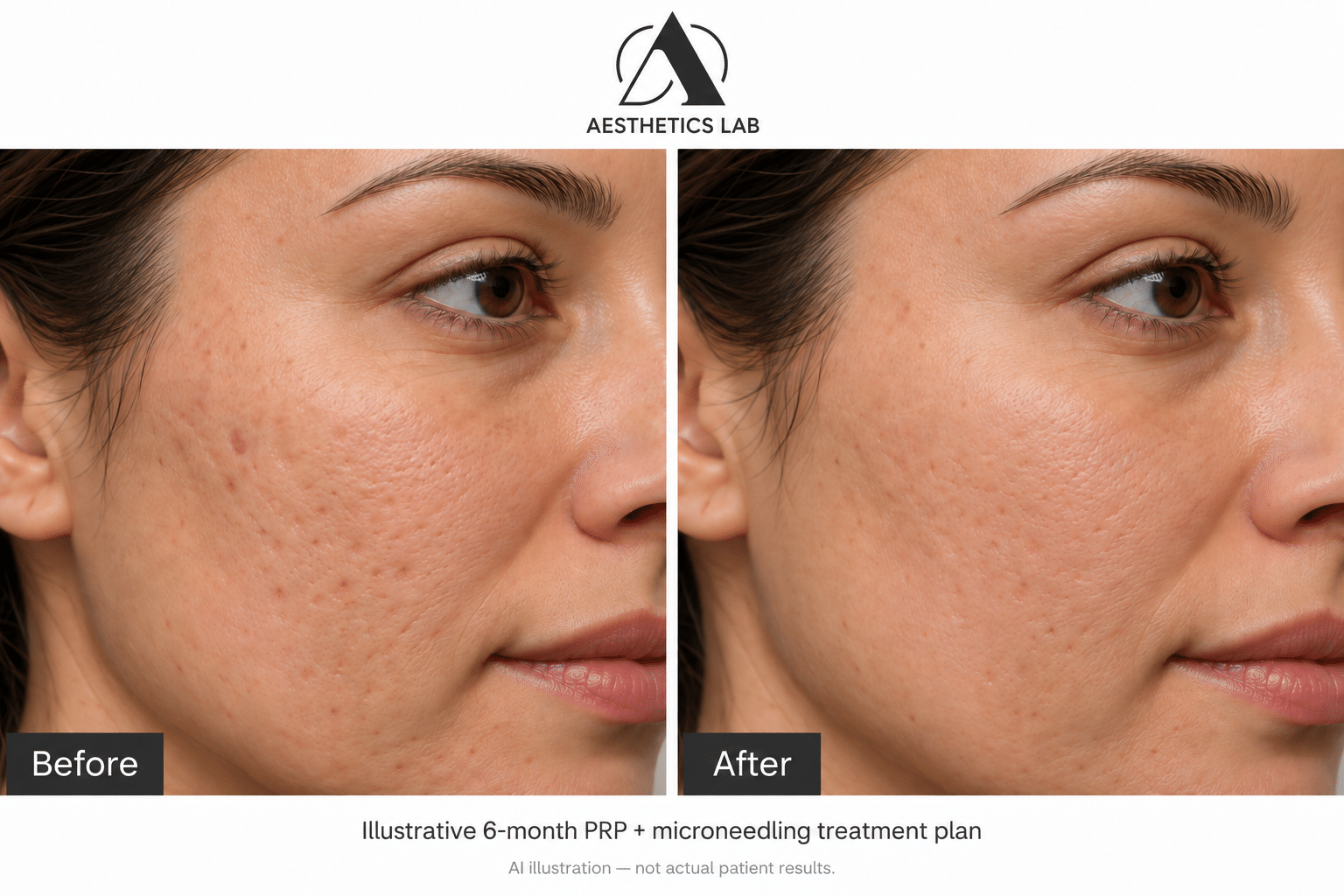
Treatment Used: Tailored Combined Treatment Plan (PRP + Microneedling)
Number of Sessions: 4 Sessions
Follow-up Period: 6 Months Post-Treatment
Results vary by individual.
How Much Does PRP for Acne Scars Cost?
Cost depends on number of sessions and combination plan. Click & Visit Now for PRP Acne Price.
Types Of Acne
There are several types of acne some of them described below
Fungal acne
The accumulation of yeast in the hair follicles is what causes fungal acne. It can be swollen and itchy.
Hormonal Acne
The overproduction of oil, or sebum leads to hormonal acne. This oil mixes with bacteria that are already present in skin pores where hair follicles develop, leading to acne.
Nodular or Cystic Acne
The pimples of cystic acne are often filled with pus, and they appear yellowish. This type of acne leaves scars. Nodular acne causes lumps and pimples on the skin’s surface.
Types of Acne Scars
Acne scars can be of different kinds. If your skin is sensitive or prone to breakouts, you might notice there are multiple types of acne scars.
Treatment Options for Boxcar Scars
Boxcar scars are named for their box-like appearance, with deep depressions on the skin. These scars typically occur after conditions such as chickenpox, varicella, or an itchy red rash. It usually appears on thick skin like on the lower cheeks and jaws.
Treatment for boxcar scars depends on scar depth and skin characteristics. Options may include microneedling, selected resurfacing procedures and other scar-directed approaches. PRP may be used as an adjunct to support collagen remodeling in selected treatment plans.
Treatment Options for Ice-Pick Scars
Ice pick scars are a common type of scar that forms after acne heals. Their size depends on how the skin heals, typically being less than half a millimetre wide. These scars appear as sharp, deep punctures on the skin, giving them a distinctive, narrow appearance.
Deep ice pick scars often require targeted scar treatment rather than relying on PRP alone. The treatment approach depends on scar depth and individual assessment, while PRP may be considered as an adjunct in selected combination plans.
Treatment Options for Rolling Scars
Rolling scars are shallow, wave-like depressions that can develop when fibrous bands beneath the skin pull the surface downward. Their appearance and severity vary, so treatment selection depends on the degree of tethering, scar depth, skin characteristics, and clinical assessment.
Treatment for rolling scars may involve scar directed procedures such as subcision, microneedling, selected resurfacing treatments, or a combination approach. PRP may be included as an adjunct in some treatment plans to support collagen remodeling and skin recovery.
Acne Scars vs Dark Spots: What’s the Difference?
This condition is known as post-inflammatory hyperpigmentation, which occurs when acne leaves behind dark spots on the skin after pimples have healed. People with darker skin tones are more prone to developing these spots.
It is essential to understand the distinction between acne scars and dark spots. Acne scars involve structural and textural changes in the skin (such as depressions or raised tissue), whereas post-inflammatory hyperpigmentation (dark spots) are flat pigment changes left behind after inflammation. While PRP primarily targets textural remodeling through collagen stimulation, specific pigmentation concerns require alternative management. For targeted care, you can explore our dedicated Pigmentation Treatment options.
One of the most recommended treatments for these dark spots is PRP for acne scars
How To Remove Dark Spots From The Face
To get rid of dark spots on the face, you first need to manage your acne. Keeping acne under control can help prevent dark spots from forming. For both acne and dark spot treatment.
- PRP produces growth factors that aid in skin healing and help fade post-inflammatory spots on the face.
- It promotes skin rejuvenation by gradually reducing the appearance of spots and discolouration over time.
What Treatments May Be Combined With PRP for Acne Scars?
When evaluating treatment options for acne scars, aesthetic care relies on a tailored approach rather than a single universal solution. Combining treatments allows dermatologists to address different scar depths, skin characteristics, and textures effectively according to individual clinical assessments.
Laser Therapy
Treatment options like ND YAG and triple-wavelength diode lasers can be integrated into a structured plan to stimulate collagen and elastin production, improving scar texture over time.
PRP for Acne Scars
Platelet-Rich Plasma utilizes concentrated growth factors derived from the patient’s blood to encourage tissue regeneration and support natural healing when combined with appropriate dermatological procedures.
Microneedling
Microneedling is frequently incorporated to create controlled micro-channels in the skin, which maximizes the absorption and efficacy of accompanying therapies like PRP for rolling, icepick, and boxcar scars.
Chemical Peeling
Chemical peels are often utilized alongside treatments like PRP to manage surface-level concerns, such as post-inflammatory hyperpigmentation caused by pustules and acne. Recovery time varies according to the type and depth of the chemical peel used.
How Does PRP for Acne Scars Work?
PRP is prepared from a sample of the patient’s own blood. After processing, the platelet-rich portion contains signaling proteins that may support tissue repair and collagen remodeling. In acne-scar treatment, PRP may be used on its own in selected protocols or combined with procedures such as microneedling. The degree of improvement depends on scar type, depth, individual skin characteristics and the overall treatment plan.
PRP Acne Scar Results: What to Expect
Changes after PRP are usually gradual because collagen remodeling takes time. Some patients may notice improvements in skin texture over several weeks to months, while deeper scars may require multiple sessions or combination treatments. Results vary and complete scar removal cannot be guaranteed.
Benefits of PRP for Acne Scars
- Acne scarring can be reduced on the face
- Collagen and elastin production increases naturally
- This is a natural therapy that uses the blood of the patient
- Cost-effective compared to laser therapy and other treatments.
PRP for Acne Scars in Lahore, Islamabad & Faisalabad
Aesthetics Lab offers acne-scar consultations at clinics in Lahore, Islamabad and Faisalabad. Treatment recommendations depend on scar type, skin characteristics and clinical assessment, and may include PRP alone or as part of a combination treatment plan.
Book an Acne Scar Consultation
Why choose the Aesthetics lab?
- Transformative beauty aesthetics lab where 150k+ satisfied customers find their radiance skin by PRP for acne scars.
- Your care is our commitment to handling all your post-procedure follow-up and aftercare.
- Safety First Aesthetics Lab Implements Cross Disinfection Protocols.
- Expert collaboration Aesthetics Lab has the largest group of certified doctors and consultant dermatologists.
- Gold standard equipment aesthetics lab utilizes FDA-approved machines.
- Everywhere You Need Us Aesthetics Lab is accessible across multiple locations.
Frequently Ask Questions
Yes, Platelet-Rich Plasma (PRP) can significantly improve the texture and appearance of certain acne scars by stimulating natural collagen production and tissue regeneration.
PRP is often considered for rolling, boxcar, and certain types of depressed acne scars, though suitability depends on individual clinical evaluation.
The number of sessions varies per individual, but a series of treatments (typically spaced several weeks apart) is often recommended to achieve optimal outcomes.
PRP is frequently combined with microneedling or other resurfacing treatments to enhance skin penetration and improve overall scar remodeling results.
Downtime is generally minimal, with mild redness or swelling typically resolving within 24 to 48 hours post-treatment.
Improvements develop gradually as collagen remodels over several weeks to months following the completion of the treatment sessions.
While PRP significantly improves scar texture and depth, complete removal of all scarring is rare; the goal is substantial, natural-looking improvement.
Results achieved through collagen remodeling are long-lasting, though individual maintenance or combination therapies may be recommended over time.
Leave a Reply